
A visual guide to leg pain linked to irritated lower-back nerves, with practical rehabilitation options and important warning signs.
What is it?
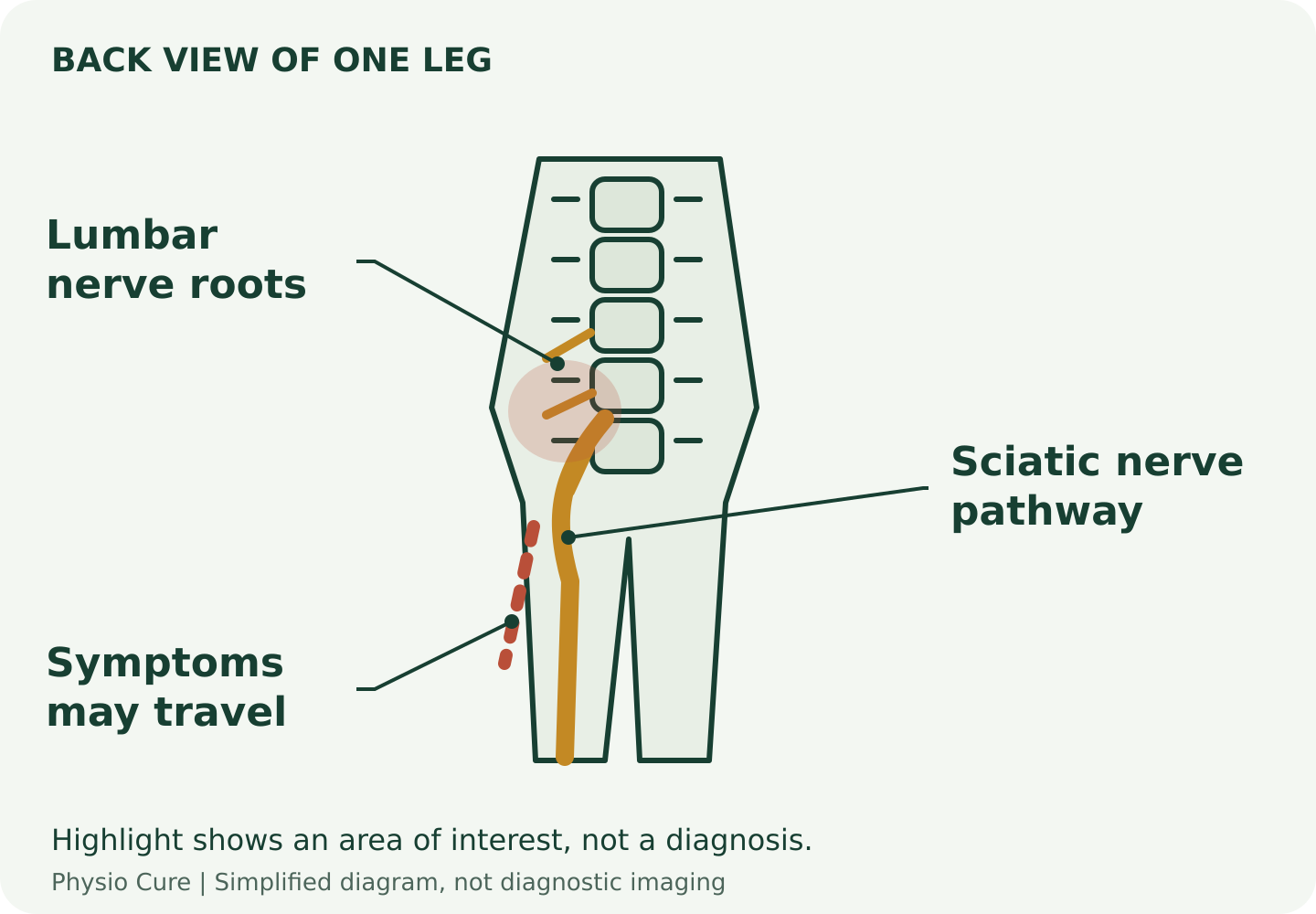
Sciatica describes pain travelling into a leg, usually from irritation of a nerve root in the lower back. Tingling, altered sensation or weakness can occur. Not every painful leg is sciatica, so an assessment matters.
- Pain spreading down a leg
- Pins and needles or numbness
- Sometimes reduced leg strength
Why assessment matters
A disc-related problem or narrowing around a nerve can contribute, but hip problems and other causes of leg pain can overlap. Assessment combines the history with nerve and movement checks. A scan is not routinely needed and should be considered when its result would change care. Assessment guidance
How physiotherapy may help
Check the nerve
Assess strength, sensation and reflexes, and monitor changes.
Find tolerable movement
Adjust positions and activity, with exercises selected for your response.
Rebuild gradually
Restore walking, strength and everyday function without forcing worsening nerve symptoms.
Everyday approach
Keep activity manageable and avoid prolonged bed rest. If an exercise makes leg pain spread further or increases numbness or weakness, stop and seek advice rather than pushing through.
What to keep in mind
Physiotherapy cannot promise to put a disc back in place. Some people need medical review, imaging when it changes care, or a specialist opinion for severe or persistent symptoms.
General educational information, not a diagnosis or personal treatment plan. For an emergency in Australia, call 000.
Sources and further reading
Selected guidance and research; this brief guide is not an exhaustive evidence review.