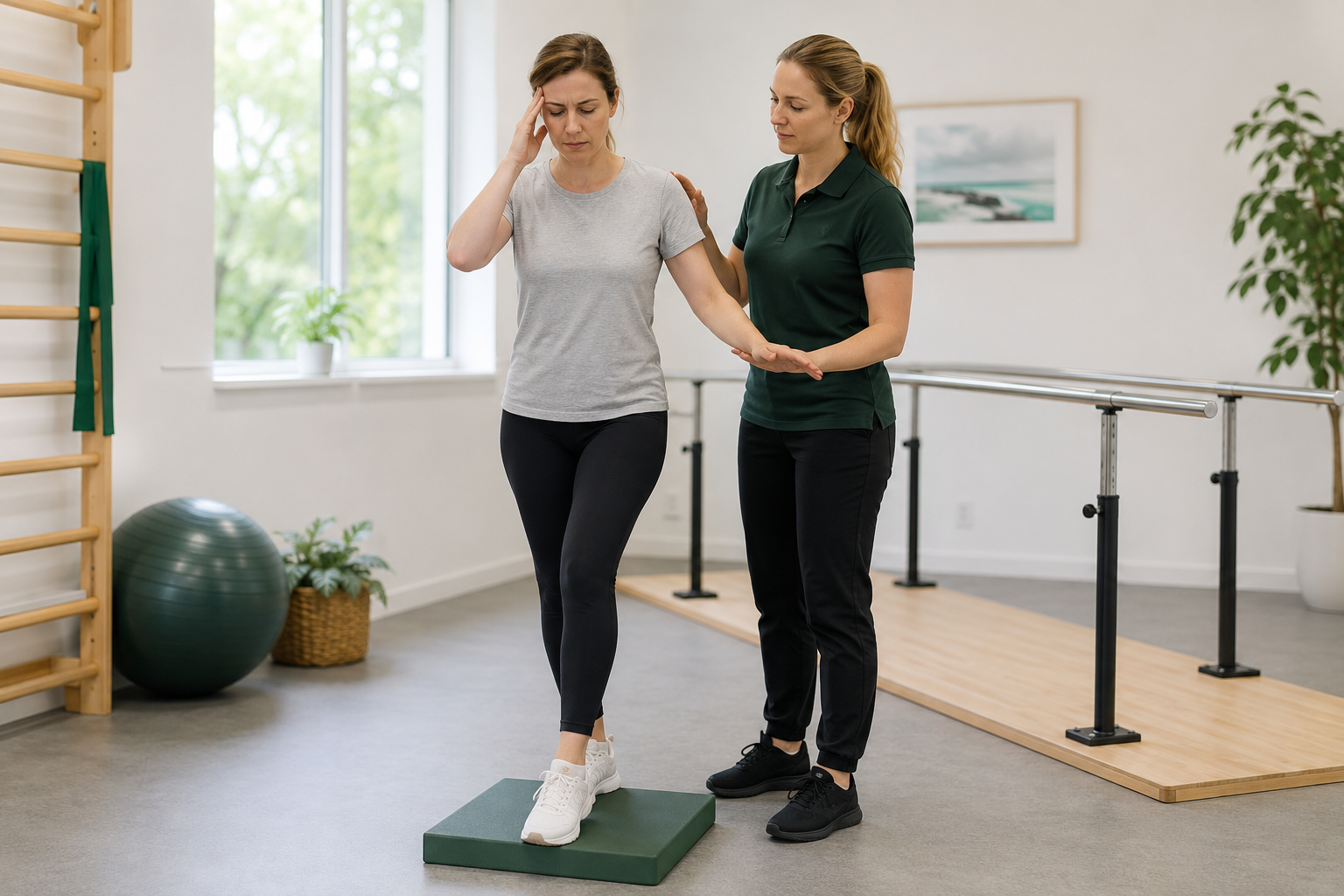
Understand your headache. Know the safest next step.
Headaches can have different causes. Physiotherapy may be useful when symptoms occur with neck pain, stiffness, restricted movement or other musculoskeletal factors. Migraine and new or unusual headaches may also require assessment and management by your GP or specialist.
Urgent headache warning signs
Some headaches need immediate medical assessment—not physiotherapy first.
Call 000 or seek urgent care for a sudden severe or “worst-ever” headache, new weakness or numbness, speech or vision change, loss of balance, seizure, collapse, confusion, fever with a stiff neck or rash, or a severe headache after head injury.
Prompt medical review is also important for a new or progressively changing headache during pregnancy or after birth, after age 50, with cancer or reduced immunity, or one triggered by coughing or exertion.
A quick decision guide
Which headache description sounds most familiar?
Headache patterns can overlap, and symptoms alone do not confirm a diagnosis. These examples help identify the most appropriate next conversation.
Neck-related headache features
- Headache associated with neck pain or stiffness
- Reduced or painful neck movement
- Symptoms affected by a sustained neck position
- Pain may begin at the back of the head and spread
A physiotherapy assessment may be suitable
Tension-type headache features
- Pressing or tightening rather than pulsing
- Often felt on both sides of the head
- May coexist with neck and shoulder tension
- Usually not aggravated by routine activity
Assess the full pattern and contributing factors
Migraine-type features
- Pulsing or throbbing, often moderate to severe
- Nausea or vomiting
- Sensitivity to light, sound or movement
- Routine activity may worsen symptoms
GP-led diagnosis and medical care are important
New, changed or unusual headache
- A first or markedly different headache
- New neurological or systemic symptoms
- Rapid change in frequency or severity
- Recent trauma or significant medical history
Medical assessment comes first
Headache physiotherapy in Elwood & Beaumaris
Where physiotherapy may fit into headache care
Physiotherapy is most relevant when headache is associated with neck pain, stiffness, restricted movement, sustained work positions, reduced activity tolerance or coexisting upper-back, shoulder or jaw symptoms.
What we can assess
- Neck movement and functional tolerance
- Muscle capacity and movement control
- Work, exercise and sleep-related factors
- Jaw, shoulder and upper-back involvement when relevant
What we do not claim
- Physiotherapy is not presented as a cure for migraine
- We do not replace GP or specialist diagnosis
- We do not advise changing prescribed medication
- No treatment result or recovery time is guaranteed
A thorough assessment
A thorough headache and neck assessment, with safety built in
Your first appointment is about understanding the whole picture, not just finding a painful spot.
-
01
Understand your headache history
Pattern, frequency, duration, triggers, associated symptoms and how headaches affect your day.
-
02
Screen for warning signs
Check whether your presentation is suitable for physiotherapy or needs medical assessment first.
-
03
Assess the neck and related areas
Movement, strength, control, sensitivity and relevant musculoskeletal contributors.
-
04
Agree on the next step
You receive a clear explanation, options, realistic goals and a plan to treat, monitor or refer.
Personalised treatment options
Your plan may combine active rehabilitation and hands-on care
Recommendations depend on your assessment, preferences and response. Passive treatment is not used as a substitute for appropriate medical care or an active self-management plan.
Education and self-management
Understand the likely contributing factors, how to pace activity, what to monitor and when to seek review.
Tailored neck and upper-back exercise
Mobility, strength, control and endurance exercises selected for your findings and gradually progressed.
Graded activity and general exercise
A practical plan to rebuild tolerance for work, exercise and daily activities without relying on complete rest.
Manual therapy or mobilisation
May be considered for a neck-related headache presentation, with expected benefits, limits and alternatives discussed.
Soft-tissue techniques
Massage or soft-tissue work may be used as one component of care where clinically appropriate.
Dry needling as an optional adjunct
Only after assessment, informed consent and discussion of risks and alternatives. It is not presented as a migraine cure.
Workstation and movement advice
Specific strategies for screens, breaks, sleep positions and sustained tasks rather than one “perfect posture”.
Referral and shared care
Communication with your GP or specialist may be recommended when medical assessment or co-management is important.
A clear care pathway
From uncertainty to the right next step
-
01
Screen
Check warning signs and suitability
-
02
Assess
Understand your individual presentation
-
03
Treat or refer
Choose the safest appropriate action
-
04
Review
Measure response and adapt the plan
Meaningful progress
We review more than today’s pain score
There is no single recovery timeline for every headache. Your plan is reviewed against meaningful measures such as:
- Headache days per month
- Intensity and duration
- Neck movement and function
- Sleep, work and activity participation
- Triggers and flare-up recovery
- Medication use recorded for discussion with your prescriber
Frequently asked questions
Clear answers before you book
If your question is not covered, email reception@physiocure.com.au or speak with our team.
Ask a physiotherapistCan physiotherapy cure migraine?
No. Physiotherapy is not presented as a cure for migraine. It may help some people address coexisting neck pain, movement limitations or physical activity factors, while migraine diagnosis and medical management remain with a GP or specialist.
Do I need a referral?
A referral is not usually required for a private physiotherapy appointment. A GP assessment should come first for a new, changed, unusual or uncertain headache pattern, or where warning signs are present.
What should I bring to my first appointment?
Bring a list of medicines, relevant scans or reports, GP or specialist letters and a headache diary if available. Do not change prescribed medication unless advised by your prescriber.
How many sessions will I need?
There is no standard number. Recommendations depend on the assessment, your goals, the headache pattern and your response. Progress should be reviewed and the plan adjusted or referral recommended when appropriate.
Can I attend during an acute migraine attack?
Contact the clinic first. Severe, new or unusual symptoms may need medical assessment. If the presentation is a familiar medically diagnosed migraine without warning signs, we can discuss whether rescheduling or an assessment is appropriate.
What if physiotherapy is not appropriate?
We explain the concern and recommend the most appropriate next step, which may include your GP, urgent care, emergency services, a dentist or another health professional.
Can neck treatment make a migraine disappear?
Neck treatment should not be marketed as a guaranteed migraine treatment. Some people with migraine also have neck pain; the role of physiotherapy depends on whether modifiable musculoskeletal factors are present.
Evidence-informed and transparent
Clinical sources behind this page
Evidence supports cautious use of exercise and some manual approaches for appropriately assessed cervicogenic headache, but certainty varies and migraine requires appropriate medical diagnosis and management.
Two Convenient Clinics
Choose the clinic that is most convenient for you.

Not sure what to book?
Tell us what you are experiencing and we will help you choose the next step.
For urgent warning signs, contact 000 or seek urgent medical care.