
See the structures around your neck and learn how tailored exercise, movement breaks and rehabilitation can support recovery.
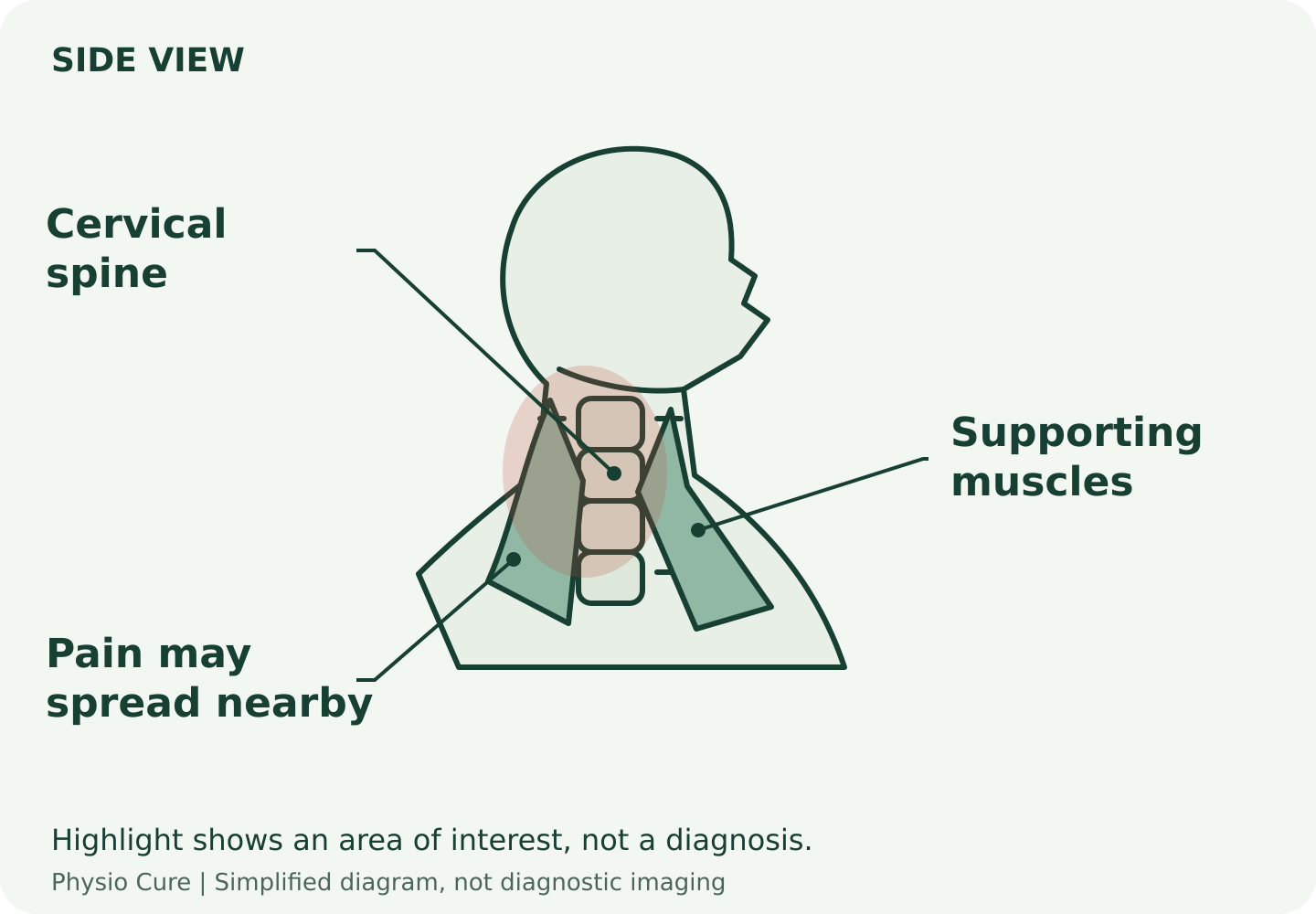
What is it?
Neck pain can involve sensitive joints, muscles and other tissues. It may follow an unfamiliar activity or develop without one clear cause. A sore neck does not automatically mean poor posture, a trapped nerve or permanent damage.
- A stiff or aching neck
- Discomfort when turning
- Sometimes pain near the shoulder
Assessment and possible causes
There is often no single injured structure to blame. Activity demands, previous episodes and health history help guide assessment. Examination distinguishes movement-related pain from nerve-root symptoms and screens for spinal cord, fracture or other serious problems. No posture or single movement test establishes the diagnosis. Assessment guidance
How physiotherapy may help
Assess the pattern
Check movement, strength, nerve symptoms and relevant warning signs.
Build capacity
Use suitable neck and shoulder exercises, increasing the challenge gradually.
Make tasks easier
Explore comfortable work positions, movement breaks and a practical activity plan.
Everyday approach
Choose varied, comfortable positions rather than holding yourself rigidly upright. Gentle movement can be useful; avoid repeatedly forcing a painful stretch. Your plan should fit your symptoms and goals.
What to keep in mind
Manual therapy may help alongside exercise for some people. It does not permanently realign the neck. New or persistent arm symptoms may need a different assessment and treatment approach.
General educational information, not a diagnosis or personal treatment plan. For an emergency in Australia, call 000.
Sources and further reading
Selected guidance and research; this brief guide is not an exhaustive evidence review.