
A better fit for the way you work Live Better.
There is no single “perfect posture.” Comfort and work participation may improve when your workstation, task demands, movement variation and symptom-management plan fit you better.
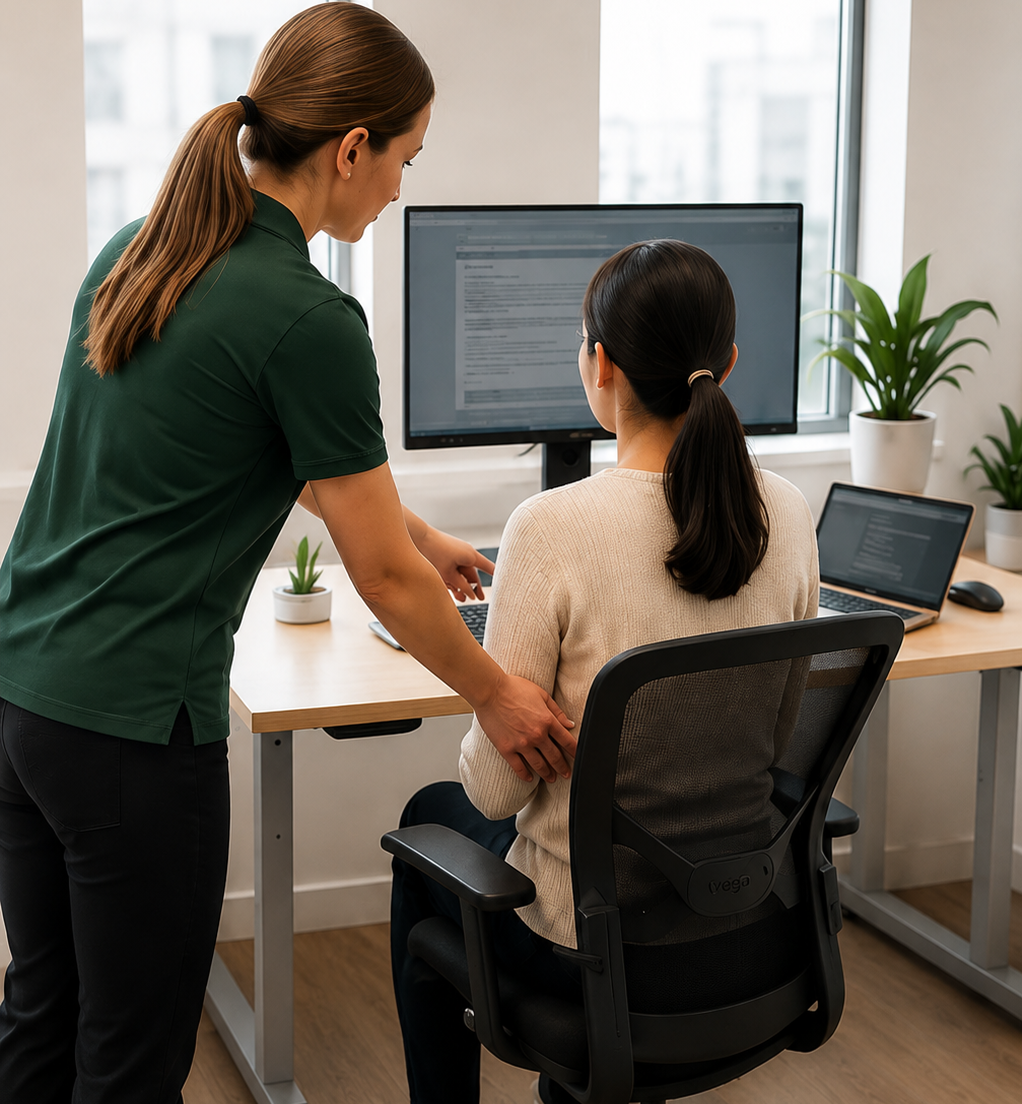
What is ergonomics?
Ergonomics considers how work is organised and how a person interacts with equipment, tools, tasks and the environment. A physiotherapy assessment can explore whether changes to setup, task exposure, movement breaks, pacing or capacity may help.
Posture is only one part of the picture. Symptoms can be influenced by many factors, and a neutral-looking posture is not a guarantee of comfort or protection from injury.
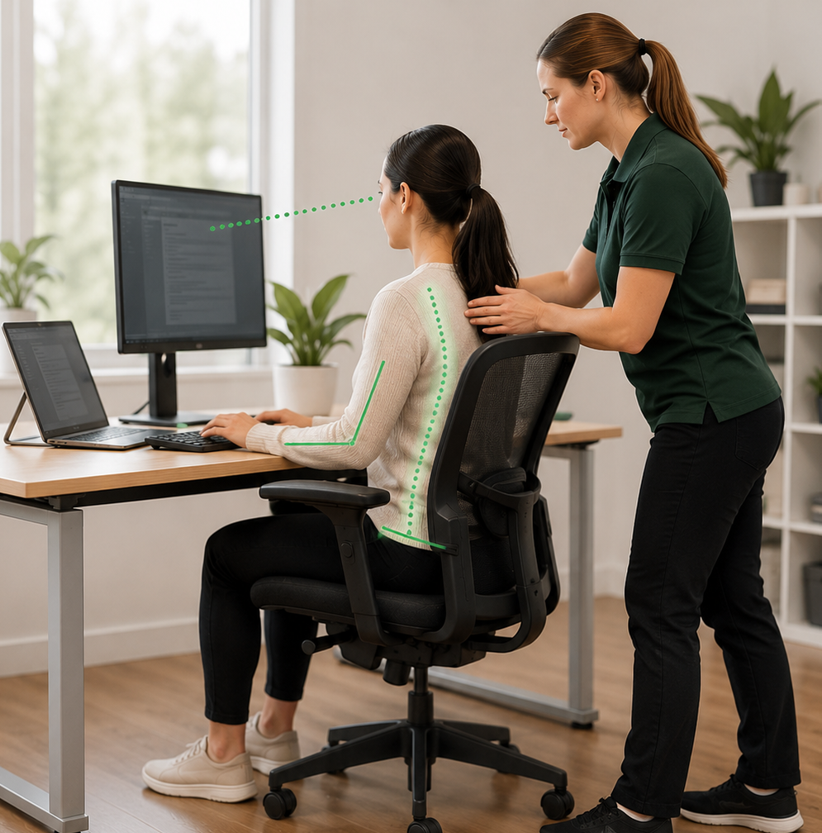
Who may benefit from an assessment?
An assessment may be useful when work tasks are uncomfortable, difficult to sustain or need to be adapted.
Office & remote workers
Desk-based work, screen use, prolonged sitting or home-office setups.
Hybrid workers
People moving between workstations with different equipment and constraints.
Physical task workers
Repeated handling, sustained positions, tools or tasks with higher physical demands.
Employers & teams
Practical input that may complement broader occupational health and safety systems.
More than chair height
Workstation setup
Chair, desk, screen, keyboard, mouse, tools and accessories.
Task demands
Workload, repetition, force, reach, time pressure and the working environment.
Movement variation
Opportunities to change position, take micro-pauses and rotate or redesign tasks.
Symptom response
How your symptoms behave during and after tasks, and what helps or aggravates them.
What you may receive
Assessment summary
Key findings explained in clear, non-alarmist language.
Prioritised changes
Simple adjustments ranked by relevance, practicality and expected value.
Movement plan
Movement variation, breaks or exercises tailored to your presentation when indicated.
Written recommendations
A written report can be discussed where required; additional fees may apply.
A focused ergonomic assessment
Listen
We learn about your work, symptoms, goals, medical context and workplace concerns.
Assess
We review the relevant setup, movements, task demands and environmental factors.
Recommend
We agree on practical adjustments, task strategies or rehabilitation priorities.
Review
Follow-up can assess what changed, what remains difficult and whether the plan needs refining.
For individual patients
We can assess musculoskeletal symptoms and discuss reasonable changes, movement strategies and rehabilitation options. Outcomes vary, and advice is tailored to assessment findings.
For employers and workplaces
A physiotherapy ergonomic assessment is one input only. Employers remain responsible for identifying and controlling workplace risks and meeting applicable Victorian occupational health and safety duties.
Ergonomics & posture FAQs
Can you assess my home office?
Yes, depending on availability and location. A clinic consultation using clear photos, measurements or video may also be useful, although it cannot replace every aspect of an on-site review.
Will you tell me the “correct” posture?
We avoid one-size-fits-all rules. We aim for a workable setup and encourage movement variation rather than suggesting one posture must be held continuously.
Do I need to buy new equipment?
Not necessarily. We usually start with practical adjustments using what is available. If equipment may help, options and limitations can be discussed without guaranteeing a particular result.
Can you provide a written report?
A report can be discussed before the appointment. Please tell us who needs it and why. Report-writing fees and consent for sharing information may apply.
Can ergonomic changes cure my pain?
No single setup can guarantee recovery. Ergonomic changes may help reduce aggravating exposures, but management may also involve activity modification, exercise, medical review or other care.
Does an assessment replace an employer's OHS assessment?
No. It may provide clinical or ergonomic recommendations, but it does not transfer or replace the employer's legal workplace-safety responsibilities.
Two Convenient Clinics
Choose the clinic that is most convenient for you.


Make work fit you better
Discuss a clinic or workplace ergonomic assessment.