
Cupping
Therapy.
An optional part of your physiotherapy plan.
Learn whether dry cupping may be appropriate for you. We assess your symptoms, discuss the evidence and risks, and consider cupping alongside education, exercise and other suitable care.
Physiotherapists
Treatment
Decisions
Locations
Appointments in Elwood & Beaumaris
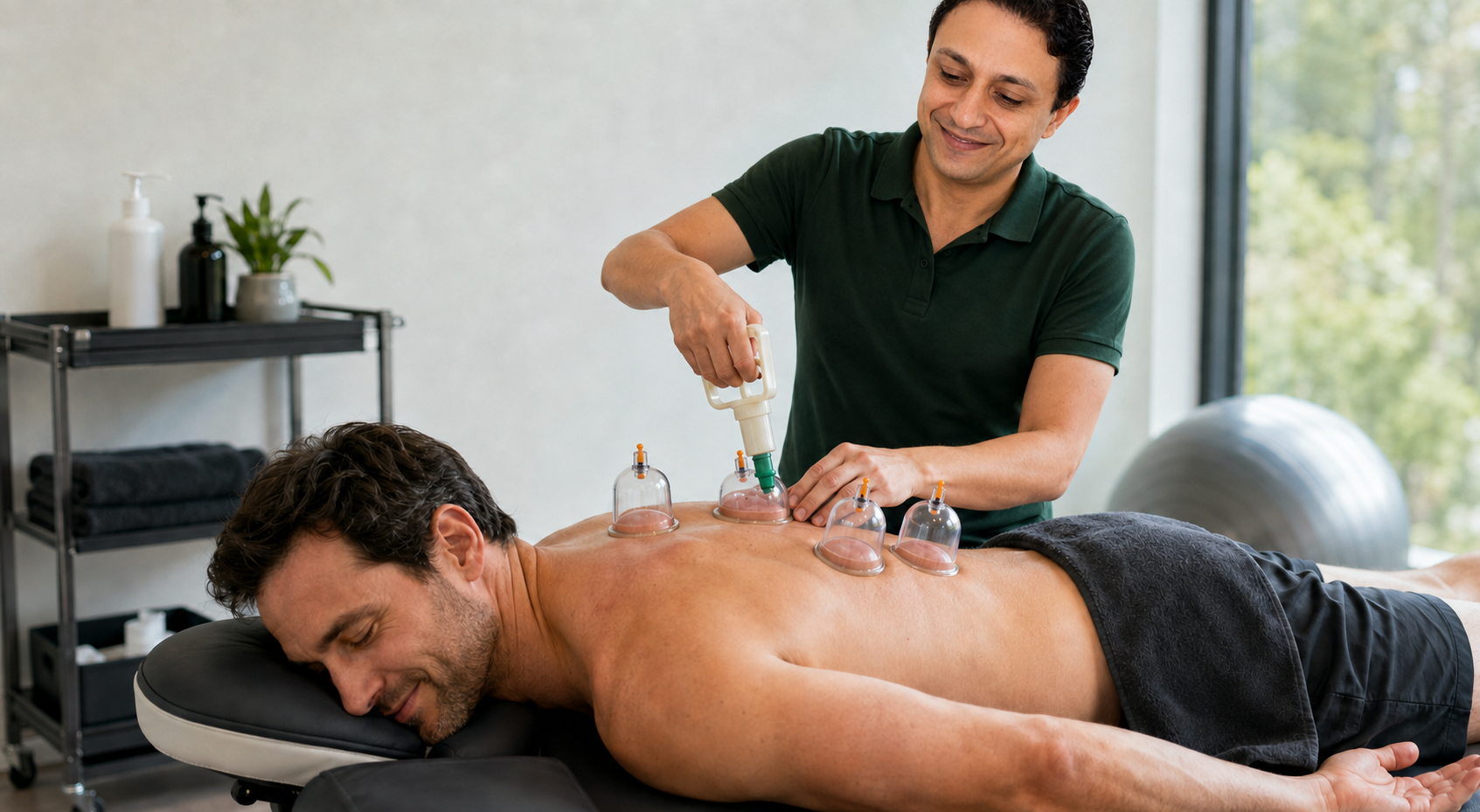
Illustrative image of dry cupping.
Understanding the treatment
What is dry cupping?
Dry cupping uses cups to create suction against the skin. It does not involve piercing the skin or drawing blood. At Physio Cure, it may be considered as an optional addition to a broader physiotherapy plan after an assessment.
Your physiotherapist will explain why it is being considered, what to expect and which alternatives may be suitable. You can choose whether to proceed and ask for treatment to stop at any time.
Clear information for your decision
What does the evidence say?
Cupping has been studied for pain, but the evidence is limited and results vary. Some studies report short-term benefit, while others find no added benefit compared with sham treatment or usual care. A particular result cannot be predicted for you.
If cupping is included in your plan, we review your response and whether it adds useful benefit. Assessment, advice and active rehabilitation remain important parts of care.
Individual assessment first
Is cupping appropriate for you?
The decision depends on your symptoms, goals, preferences and health history. Your physiotherapist may recommend a different approach.
Your symptoms and goals
We discuss what is troubling you, how it affects daily life and what you want to work towards.
Your health and medicines
Tell us about medical conditions, medicines, bleeding or bruising concerns, pregnancy and previous reactions to treatment.
Your skin and comfort
We check the proposed treatment area and discuss any skin conditions, wounds, altered sensation or concerns about touch.
Your informed choice
We explain potential benefits, limitations, side effects and alternatives before seeking your consent.
Before you decide
Possible side effects and precautions
Marks and other side effects
Cupping commonly leaves temporary circular marks. Soreness, irritation or increased discomfort may occur. Skin damage, persistent discolouration and infection are also possible. Some skin conditions, including eczema or psoriasis, may worsen.
Tell your physiotherapist promptly if treatment is painful or your skin feels irritated. Seek medical advice if you develop significant skin damage, spreading redness, worsening pain or other concerning symptoms after treatment.
A suitability check matters
Let us know about all medicines, allergies and relevant health conditions, particularly bleeding or bruising problems, fragile or damaged skin, and changes in sensation. Treatment may need to be avoided or modified, or medical advice sought first.
Your physiotherapist will discuss precautions relevant to you and the proposed technique. You can decide against cupping and discuss other treatment options.
How treatment fits together
From assessment to review
Assess
Discuss symptoms and goals, review your health history and assess relevant movement and the treatment area.
Explain and agree
Discuss the available evidence, potential benefits, risks and alternatives, then agree on whether to proceed.
Treat if appropriate
The approach is selected for your presentation and comfort. Tell your physiotherapist how the treatment feels.
Review the plan
Review your response and continue appropriate exercise, education or other rehabilitation strategies.

Experienced, local, personal
Led by Hany Bebawy and the Physio Cure team
Principal Physiotherapist Hany Bebawy leads the Physio Cure team. Treatment decisions are made with you, taking account of your presentation, preferences and the available evidence.
Clear explanations. Individual care. Regular review.
Hany Bebawy
Principal Physiotherapist
FAQs
Frequently asked questions
Does cupping hurt?
You may notice a pulling sensation. Tell your physiotherapist immediately if it is painful or uncomfortable so treatment can be adjusted or stopped.
Will cupping leave marks?
Temporary circular marks are common and the time they take to fade varies. Persistent discolouration or skin injury can also occur. Your physiotherapist will explain the possible effects before treatment.
Is cupping suitable for everyone?
No. Your physiotherapist will assess your health history, medicines, skin and treatment area before deciding whether to offer it. Another approach or medical review may be more appropriate.
Does this service include wet cupping or Hijama?
This page describes dry cupping within physiotherapy. Wet cupping or Hijama involves piercing the skin and drawing blood and is not part of the service described here.
Our locations
Appointments in Elwood & Beaumaris

Elwood
Physio Cure Elwood
Level 1, 61 Brighton Road, Elwood VIC 3184
Beaumaris
Physio First Beaumaris
19 Keys Street, Beaumaris VIC 3193Start with an assessment