
Back pain is common. Your care should be individual.
Assessment-led physiotherapy for new, persistent or recurring back pain—including symptoms that may travel into the buttock or leg.
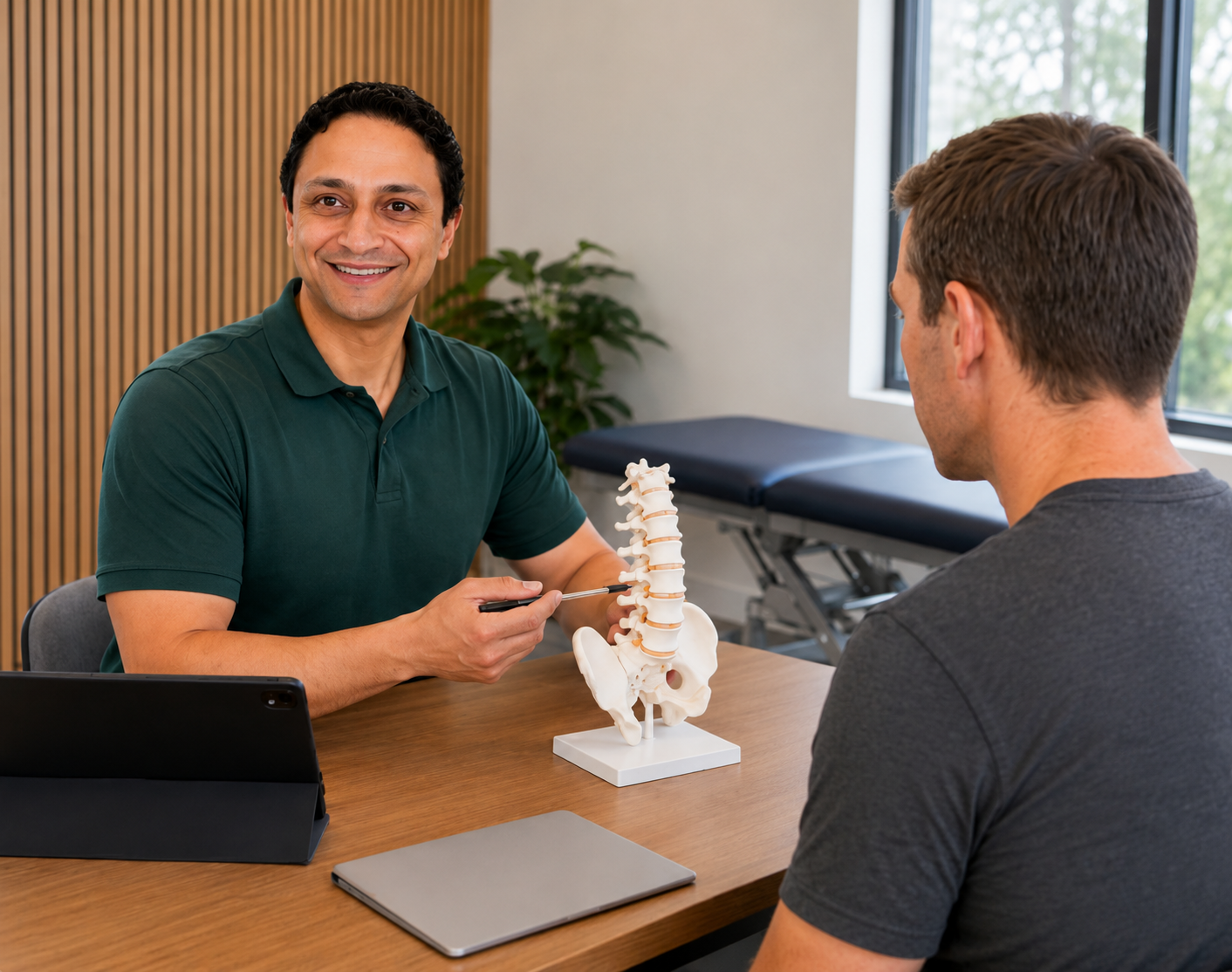
Where are you starting from?
Assessment before treatment
Start with the right assessment
Back pain can have different contributors. We begin by listening to what happened, how symptoms affect your life and what you need to return to.
Your physiotherapist may assess movement, strength, daily function and relevant neurological signs. We also consider health, work, sleep, confidence and previous episodes.
From there, we agree on a practical plan and explain what to monitor.
Different experiences, individual plans
Back pain can present in different ways
You do not need to know your diagnosis before booking. Assessment helps clarify what may be contributing and whether further review is needed.
Low back pain & stiffness
Central or one-sided discomfort that can vary with movement, posture or activity.
Bending, lifting or sitting
Symptoms influenced by work, exercise, sustained positions or daily tasks.
Buttock or leg symptoms
Pain, tingling or altered sensation that may require a neurological screen.
Recurring flare-ups
Understanding patterns and building confidence for future episodes.
Mid-back discomfort
Assessment may consider movement, breathing, load and surrounding regions.
Return-to-activity support
Graded planning after surgery, time away from work or reduced activity.
Your first consultation
What happens at your first appointment?
-
01
Listen
We take time to understand your story, concerns, daily demands and goals.
-
02
Screen
We check for symptoms or health factors that may need medical review.
-
03
Assess
We assess relevant movement, strength, function and neurological signs.
-
04
Plan
We explain the findings and agree on priorities and practical next steps.
Individual, active and practical
Your plan may include
Recommendations depend on your assessment, preferences, tolerance and goals.
Education & reassurance
A clear explanation of the findings, what may help and what to monitor.
Activity and load planning
Practical adjustments without unnecessary fear or prolonged bed rest.
Graded movement
Individual exercises progressed according to response and function.
Work and daily-life strategies
Advice relevant to sitting, lifting, sport, caring and everyday activities.
Selected manual therapy
Hands-on options may support comfort and movement when appropriate.
Adjunct options
Additional modalities may be considered with explanation and consent.
No single treatment suits every person. Hands-on care and adjunct modalities are considered only when clinically appropriate and are used to support—not replace—active rehabilitation.
A common question
Do I need an X-ray or MRI?
Imaging is not routinely required for uncomplicated low back pain. It may be considered when findings suggest a serious condition or when the result is likely to change management.
Discuss your symptomsProgress with purpose
A clear path forward
-
⌕
Assess
-
◎
Set priorities
-
▥
Build capacity
-
↻
Review & progress
Timeframes vary with the cause, duration, health, work and goals. We review progress and adjust the plan with you.
Some symptoms need urgent medical assessment
- New loss of bladder or bowel control, difficulty passing urine, or numbness around the groin, genitals or buttocks (saddle area)
- Sudden or worsening leg weakness or widespread numbness
- Back pain after major trauma or concern about a fracture
- Fever or feeling very unwell together with back pain
- Severe unremitting pain, concerning night pain, unexplained weight loss or a history of cancer
- Chest pain, breathing difficulty, fainting or another medical emergency
Call 000 immediately for new loss of bladder or bowel control, difficulty passing urine, saddle-area numbness, sudden loss of leg strength or feeling, chest pain, breathing difficulty or major trauma. These symptoms need emergency assessment. Seek urgent medical care for the other warning signs above; do not wait for a physiotherapy appointment.
Helpful information
Back pain questions, answered
Do I need a referral?
Most private patients do not need a referral. A referral may be required for some funding pathways, including certain Medicare, DVA, WorkCover or TAC arrangements.
Do I need an X-ray or MRI?
Imaging is not routinely required for uncomplicated low back pain. It may be considered when clinical findings suggest a serious condition or when the result is likely to change management.
Should I rest or keep moving?
Prolonged bed rest is generally not recommended for uncomplicated low back pain. Your physiotherapist can help you identify tolerable activities and gradually build movement according to your presentation.
Can physiotherapy help pain that travels into my leg?
Physiotherapy may be appropriate for some people with back-related buttock or leg symptoms. Assessment is needed to screen neurological signs and determine whether physiotherapy, medical review or referral is appropriate.
How many sessions will I need?
There is no fixed number. Recommendations depend on the assessment, symptom duration, functional limitations, response to care, health factors and goals. Progress should be reviewed regularly.
What should I bring and wear?
Wear comfortable clothing that allows the relevant area and movements to be assessed. Bring relevant referrals, imaging reports, medication information, claim details and private health card where applicable.
Looking for information about neck pain physiotherapy? Visit our dedicated page. Still have a question? Email reception@physiocure.com.au or call 03 9525 6077 .
Two Convenient Clinics
Choose the clinic that is most convenient for you.


Ready to understand your back pain and next steps?
Information on this page is general and does not replace individual medical advice. Read more: Australian Low Back Pain Clinical Care Standard and Healthdirect: back pain.