
Learn why the joint at the base of the thumb can hurt and how hand exercises, task changes and supports may help.
What is it?
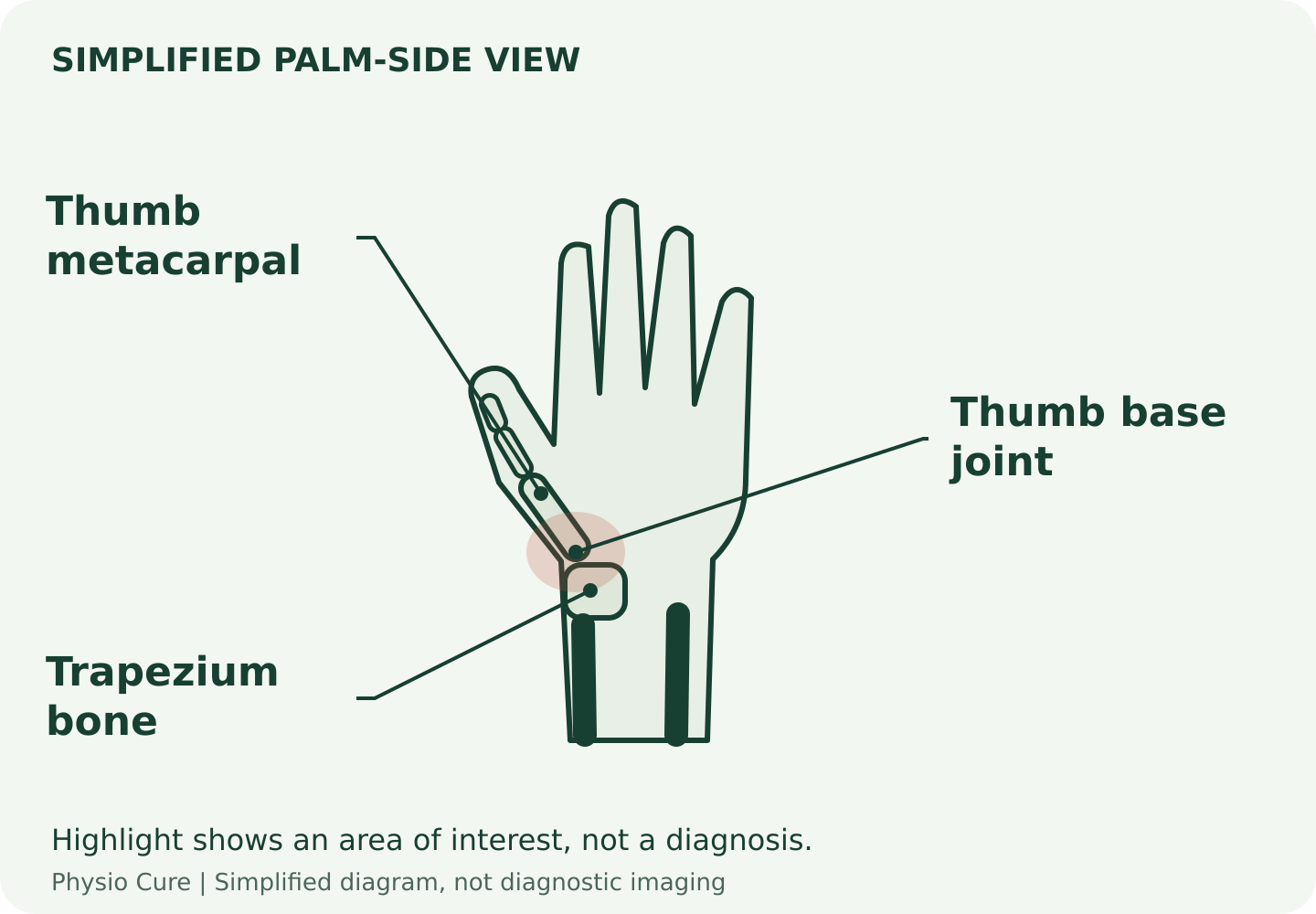
Thumb-base osteoarthritis affects the joint where the thumb meets the wrist. Changes involve the whole joint, not just cartilage. Pinching, opening jars or turning keys can be painful. X-ray changes and the amount of pain do not always match.
- Pain near the thumb base
- Difficulty pinching or gripping
- Stiffness or reduced hand function
Causes and assessment
Increasing age, family history and previous joint injury can contribute. Examination considers the location of pain, movement and hand function; tendon problems or an injury can cause nearby pain too. X-rays may support assessment, but arthritis on a film does not establish how much pain someone should have. Assessment guidance
How physiotherapy may help
Make tasks easier
Use larger handles, two-handed grips and pacing to reduce painful pinching.
Train the hand
Choose comfortable mobility and strengthening exercises matched to your function.
Consider support
A fitted thumb orthosis may help symptoms during selected tasks or rest.
Everyday approach
Keep using the hand in manageable ways rather than stopping every activity. A hand therapist or physiotherapist can help you try aids and check that a support is comfortable and does not cause numbness.
What to keep in mind
Treatment aims to improve comfort and function; exercise does not regrow cartilage. Your GP can advise on medication. If pain remains disabling despite appropriate non-surgical care, further assessment may be useful.
General educational information, not a diagnosis or personal treatment plan. For an emergency in Australia, call 000.
Sources and further reading
Selected guidance and research; this brief guide is not an exhaustive evidence review.