
Pain around or behind the kneecap can respond to well-planned exercise and activity changes. See how the joint works.
What is it?
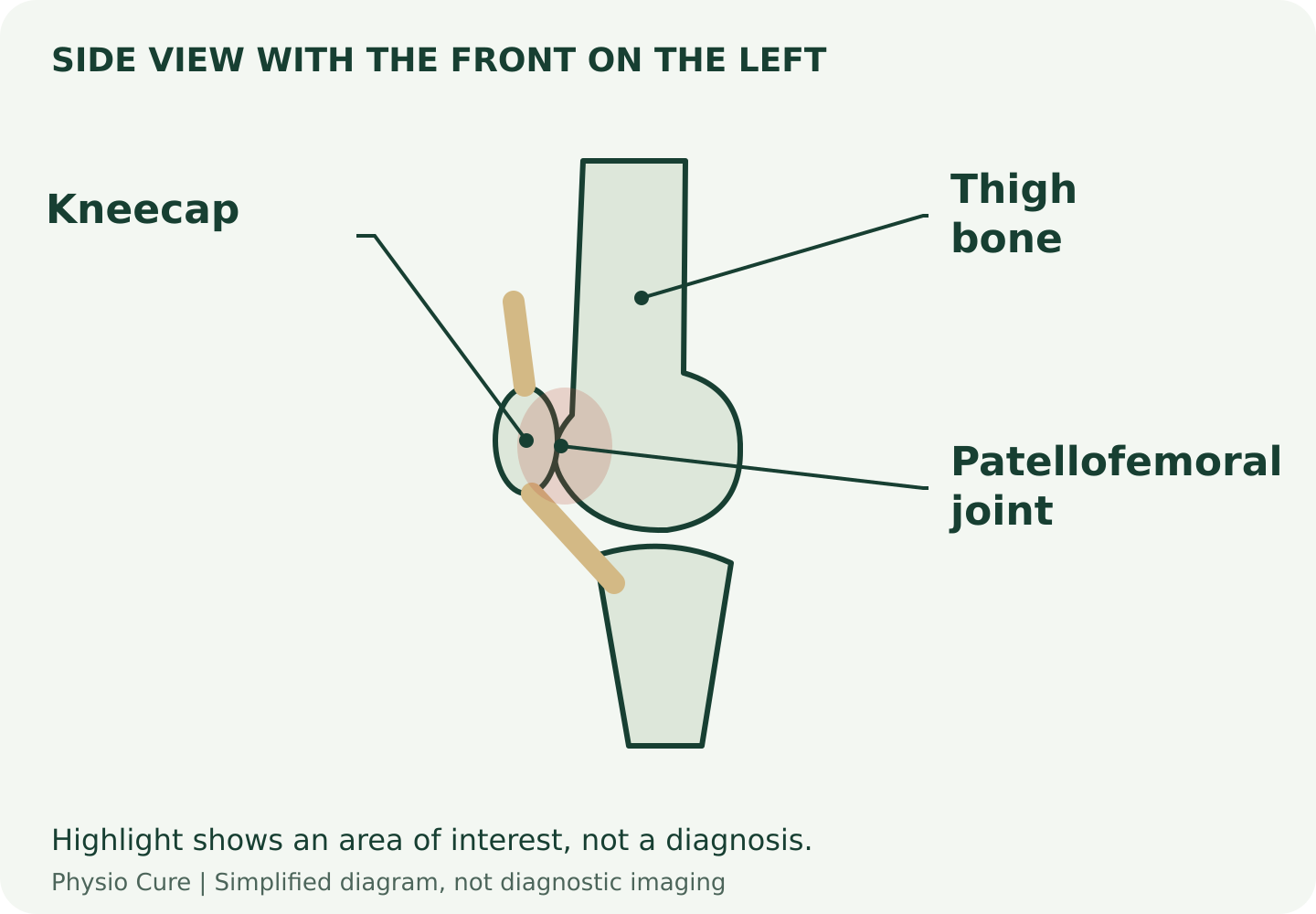
Patellofemoral pain is pain around or behind the kneecap. It often appears with stairs, squatting, running or sitting with the knee bent. It does not automatically mean the kneecap is out of place or that cartilage is damaged.
- Pain around the kneecap
- Discomfort on stairs or squats
- Pain after increased training
Assessment and other causes
Changes in activity demands may contribute, but no single movement pattern explains every case. Assessment explores loading, strength, symptoms and goals. Patellar tendon pain, arthritis, instability and other knee conditions can overlap. A single squat or scan cannot identify every cause, so unusual findings or poor progress should prompt reassessment. Assessment guidance
How physiotherapy may help
Understand the load
Review recent activity changes, symptoms and movement demands.
Strengthen gradually
Use knee-targeted exercise, adding hip exercise when appropriate.
Tailor extra support
Taping, foot orthoses or movement retraining may help selected people alongside exercise.
Everyday approach
Temporarily reduce the most provocative distance, depth or intensity rather than stopping every activity. Increase training in manageable steps and track your response later that day and the next day.
What to keep in mind
Education and exercise are central to care, but there is no single programme for everyone. Passive treatments alone are unlikely to build long-term capacity. Persistent or unusual symptoms need reassessment, not simply harder exercises.
General educational information, not a diagnosis or personal treatment plan. For an emergency in Australia, call 000.
Sources and further reading
Selected guidance and research; this brief guide is not an exhaustive evidence review.