
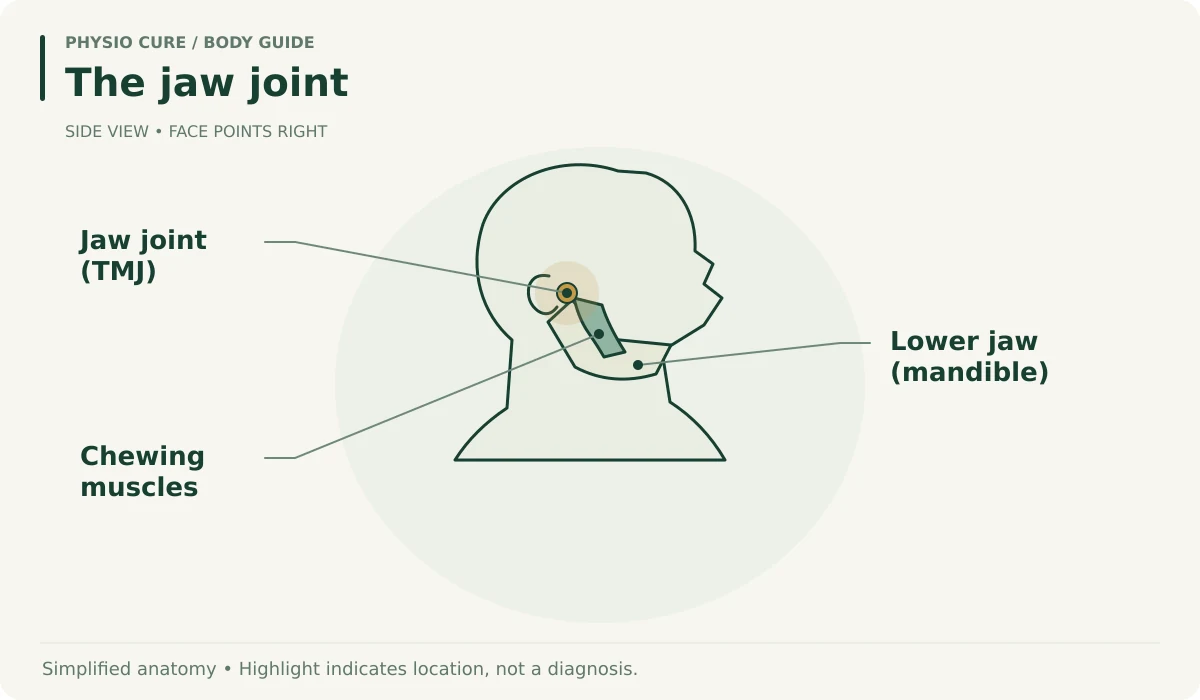
Jaw pain can make eating, talking and yawning uncomfortable. When it persists, understanding the problem matters more than finding a single exercise or device. Painful temporomandibular disorders, or TMD, involve the jaw joints, chewing muscles or both. “TMJ” names the joint itself; “TMD” describes the disorders. Jaw pain can also have other causes, so assessment comes before treatment. NIDCR overview
Recognising possible TMD
Symptoms can include aching near the jaw or temple, pain with chewing, stiffness, reduced opening or episodes of locking. Some people have headaches or pain around the ear. These symptoms do not prove TMD. Clicking without pain is common and generally does not need treatment. NIDCR overview
There is rarely one explanation. Jaw injury, frequent clenching or other jaw habits, disturbed sleep and psychological distress can be associated with TMD. Other pain conditions may also contribute to a person's overall experience. These are possible influences, not proof of the cause in an individual, and stress-related influences do not make pain imaginary. OPPERA prospective research · Jaw injury cohort study
What an assessment can establish
A physiotherapy assessment may explore when symptoms began, how jaw movements affect them, and their impact on daily life. Examination can assess opening, movement and muscle tenderness, including whether testing reproduces the person's familiar pain. Sleep, distress and other pain problems also matter. DC/TMD diagnostic criteria
An examination cannot identify every internal joint change or exclude every alternative diagnosis. Dental disease, infection, ear conditions, nerve pain and inflammatory disorders may need assessment by a dentist, GP or specialist. Scans are not routine for everyone; they are considered when the findings would affect diagnosis or management. DC/TMD diagnostic criteria · TMD clinical review
What the evidence supports for persistent pain
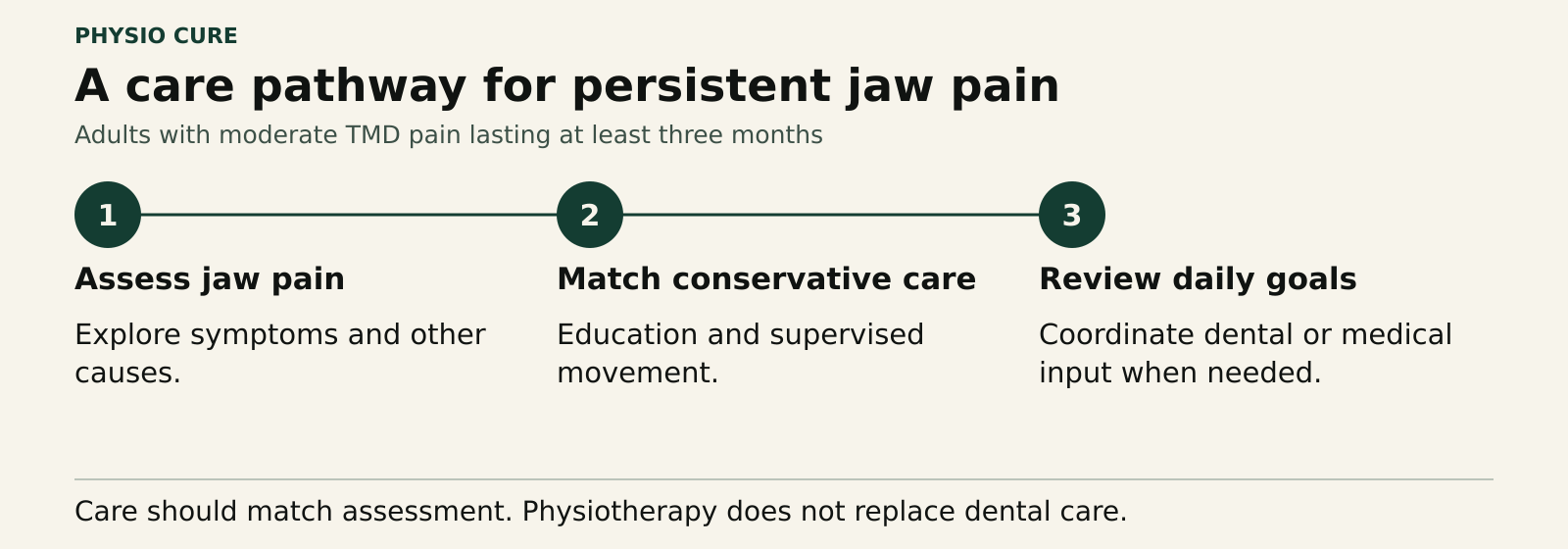
The 2023 BMJ guideline supports several conservative approaches for adults with moderate TMD pain lasting at least three months. These include education and supported self-management, supervised jaw exercises and stretching, selected manual therapies such as therapist-assisted jaw mobilisation, and cognitive behavioural therapy. These recommendations do not apply to acute TMD pain, and they should not be assumed to suit every TMD subtype. BMJ clinical practice guideline
The linked systematic review included 153 trials with 8,713 participants in its network analyses. Its strongest evidence favoured approaches that support movement and coping. However, evidence certainty varied between treatments, and information about adverse effects was often limited. No approach guarantees relief for every person. BMJ systematic review and network meta-analysis
For physiotherapy, this means matching care to the assessment rather than giving everyone the same exercise sheet. A plan may combine education, appropriately supervised movement and hands-on treatment where suitable, with progress reviewed against everyday goals such as eating more comfortably. Psychological support can complement physical care when persistent pain is affecting coping or wellbeing. BMJ systematic review
Dental coordination remains important. A dentist can assess tooth-related problems and whether a splint has an appropriate role. Guidelines differ on splints for TMD pain, so they should not be presented as an automatic fix or a substitute for assessment. Physiotherapy does not replace dental care. BMJ clinical practice guideline · RCS and NHS guideline
When to seek medical or dental help
Seek urgent assessment for facial swelling with fever, significant trauma, a jaw stuck open, or severe restriction that prevents eating or drinking. New facial numbness, a persistent lump or mouth ulcer, or worsening unexplained symptoms also need prompt review. New headache with jaw pain and visual changes requires urgent medical care. RCS and NHS guideline
Call 000 for suspected heart attack symptoms, including jaw discomfort with chest pain, breathlessness or sweating, or for difficulty breathing. Heart Foundation · Healthdirect emergency guidance
Persistent jaw pain deserves a coordinated plan. Physiotherapy, dental and medical input may each have a role, depending on the assessment.
General information only; this article does not replace individual assessment or advice.