
Understand common low back pain, why movement matters and how physiotherapy can help you return to everyday activities.
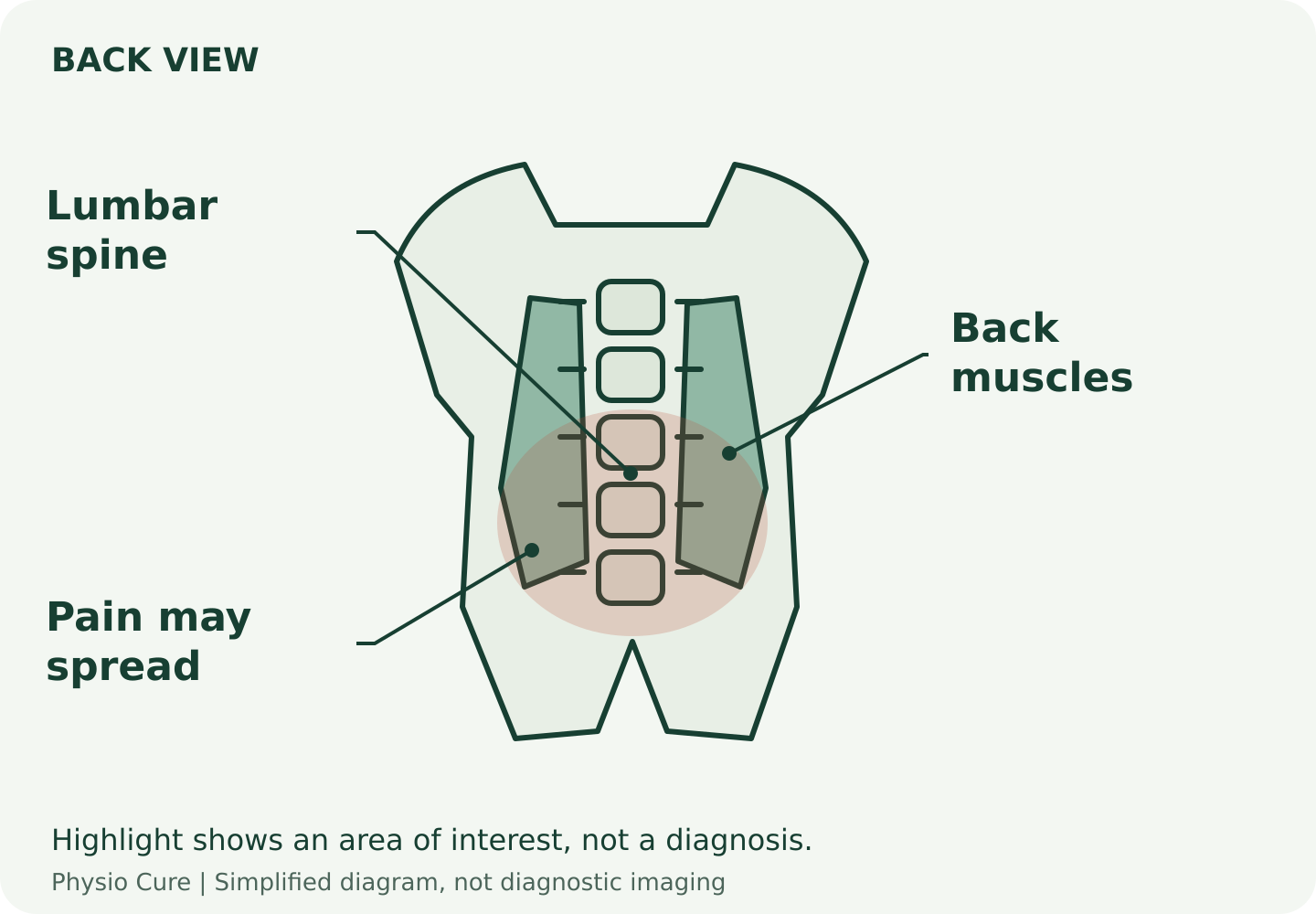
What is it?
Most low back pain is called non-specific: an assessment does not identify one serious disease or a single structure that explains it. Pain is real, but its intensity does not reliably measure tissue damage. A scan is not routinely needed.
- Aching across the lower back
- Stiffness when getting moving
- Discomfort with some daily tasks
How physiotherapy may help
Understand your pain
Check symptoms, movement and any signs that need medical assessment.
Keep moving
Choose manageable activity and build strength and confidence at your pace.
Plan the return
Adapt work, lifting and exercise, then gradually rebuild what you can do.
Everyday approach
Try shorter, comfortable bouts of movement rather than staying in bed. Change position when it helps. There is no single perfect posture or exercise for everyone.
What to keep in mind
Hands-on treatment may provide short-term relief as part of an active plan; it is not a stand-alone fix. Persistent or changing symptoms need reassessment.
General educational information, not a diagnosis or personal treatment plan. For an emergency in Australia, call 000.