
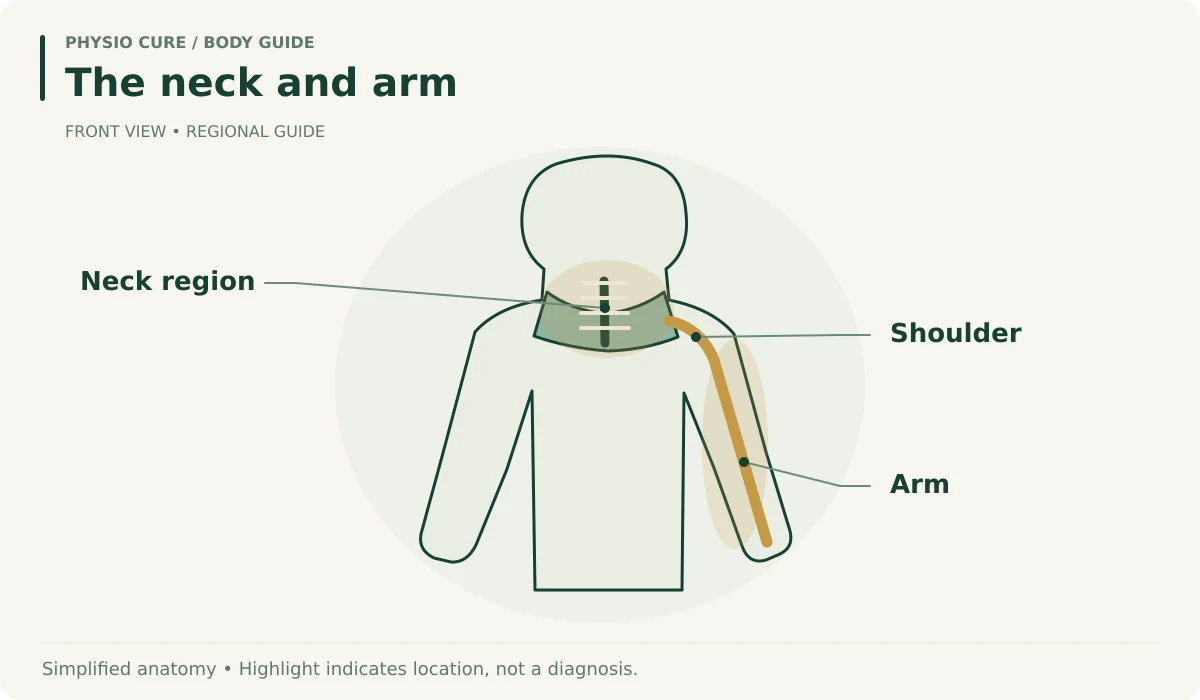
Pain travelling from the neck into the arm, especially with tingling or weakness, deserves more than a generic neck-pain exercise sheet. Cervical radiculopathy is one possible explanation, but assessment is important because several conditions can feel similar.
What is cervical radiculopathy
Cervical radiculopathy means a nerve root in the neck is not functioning normally. It can cause reduced sensation, muscle weakness or altered reflexes, often alongside pain extending into the shoulder, arm or hand. Pain from an irritated nerve root is called radicular pain; it can occur without measurable loss of nerve function. Diagnostic review, 2026
Causes and common symptoms
Common causes include a herniated disc and age-related changes that narrow the opening where a nerve leaves the spine. Degenerative changes become more relevant with age; younger adults may develop symptoms following a disc injury. Symptoms can also start without a clear injury.
People may notice burning or shooting arm pain, pins and needles, numbness or difficulty using particular muscles. Neck movement can change symptoms, but neck pain is not always the main complaint. A symptom pattern alone cannot identify the affected nerve reliably. AAOS patient information
What a physiotherapy assessment can establish
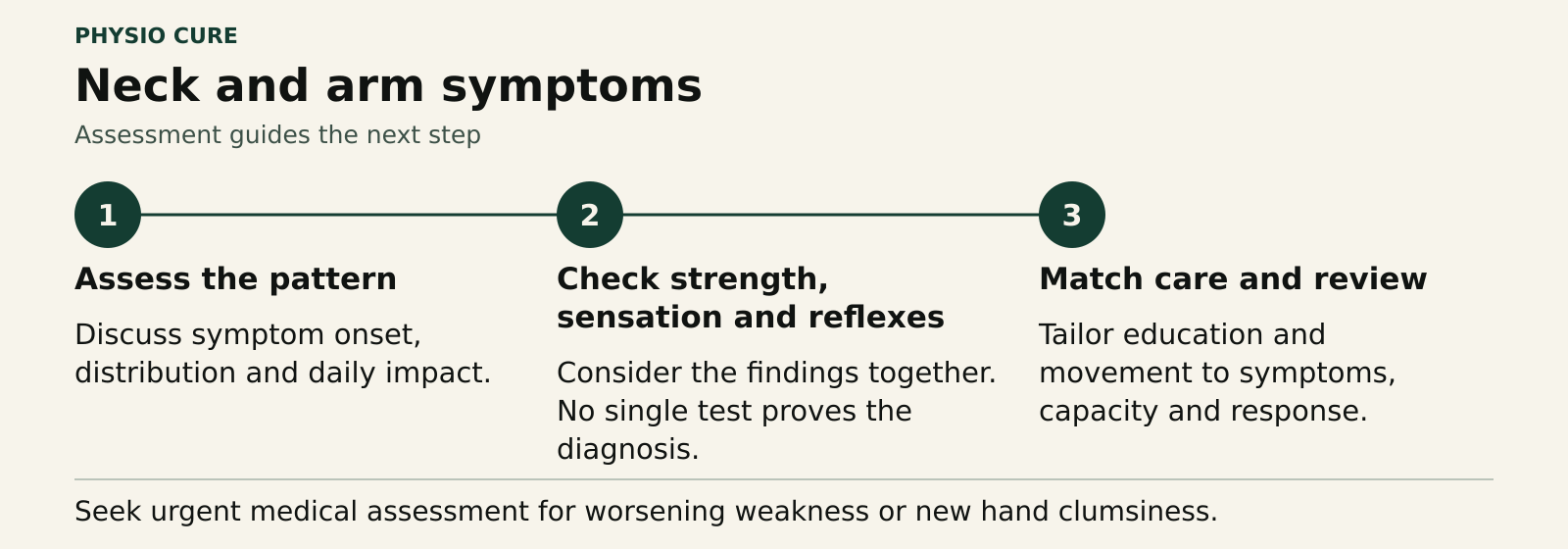
Assessment considers when symptoms began, their distribution, sleep and daily activities, and any changes in strength or coordination. Examination may include neck and shoulder movement, muscle strength, sensation and reflexes, alongside carefully selected nerve-related tests. The findings need to be considered together: a 2026 systematic review found limited, mostly very-low-certainty evidence for individual physical tests. No single manoeuvre proves the diagnosis. Diagnostic review, 2026
Shoulder disorders and nerve compression at the elbow or wrist, including carpal tunnel syndrome, can produce overlapping symptoms. Assessment also looks for signs that the spinal cord, rather than an individual nerve root, may be involved. AAOS, NICE guidance
MRI may be appropriate depending on the examination and clinical course. It must be interpreted alongside symptoms: scan abnormalities can occur without pain, and MRI alone does not establish symptomatic radiculopathy. ACR imaging guideline
How physiotherapy may help
Care is usually non-surgical initially when there are no concerning neurological changes. Physiotherapy may include education, adapting aggravating activities and gradually rebuilding movement, strength and confidence. Exercises should match the person's symptoms and capacity rather than follow a universal routine. Manual therapy or nerve-mobility techniques may be considered as part of an individualised programme, with the response monitored. 2024 physiotherapy guideline
The evidence has important limits. A 2023 systematic review found low- to very-low-certainty evidence for combined conservative treatments. Research does not establish one best physiotherapy package or support a guaranteed recovery time. Plener and colleagues, 2023
Many people improve without surgery, but recovery varies. Persistent disabling pain or neurological loss warrants medical review. A 2024 review comparing personalised physiotherapy with surgery found only two original trials and low-certainty evidence; it does not justify promising that either approach is always better. Klein Heerenbrink and colleagues, 2024
When to seek medical help
Seek urgent medical assessment for worsening weakness, new hand clumsiness, difficulty walking or balancing, or new bladder or bowel changes. These can suggest spinal cord involvement and should not wait for a routine physiotherapy appointment. NICE guidance
Prompt medical review is also important after significant trauma, or with fever, unexplained weight loss or a history of cancer alongside new symptoms. ACR guideline
Call Triple Zero (000) for arm pain accompanied by chest discomfort, breathlessness or other suspected heart-attack symptoms. Heart Foundation
Physio Cure can assess neck-related arm symptoms and discuss an appropriate plan, including referral when needed. This article provides general information, not an individual diagnosis or exercise prescription.